Navigating Deposit Method Variations and Their Impact on Game Selection in Online Casino Environments for Slot and Card Play
Jonas Jenkins · Oct 27, 2026
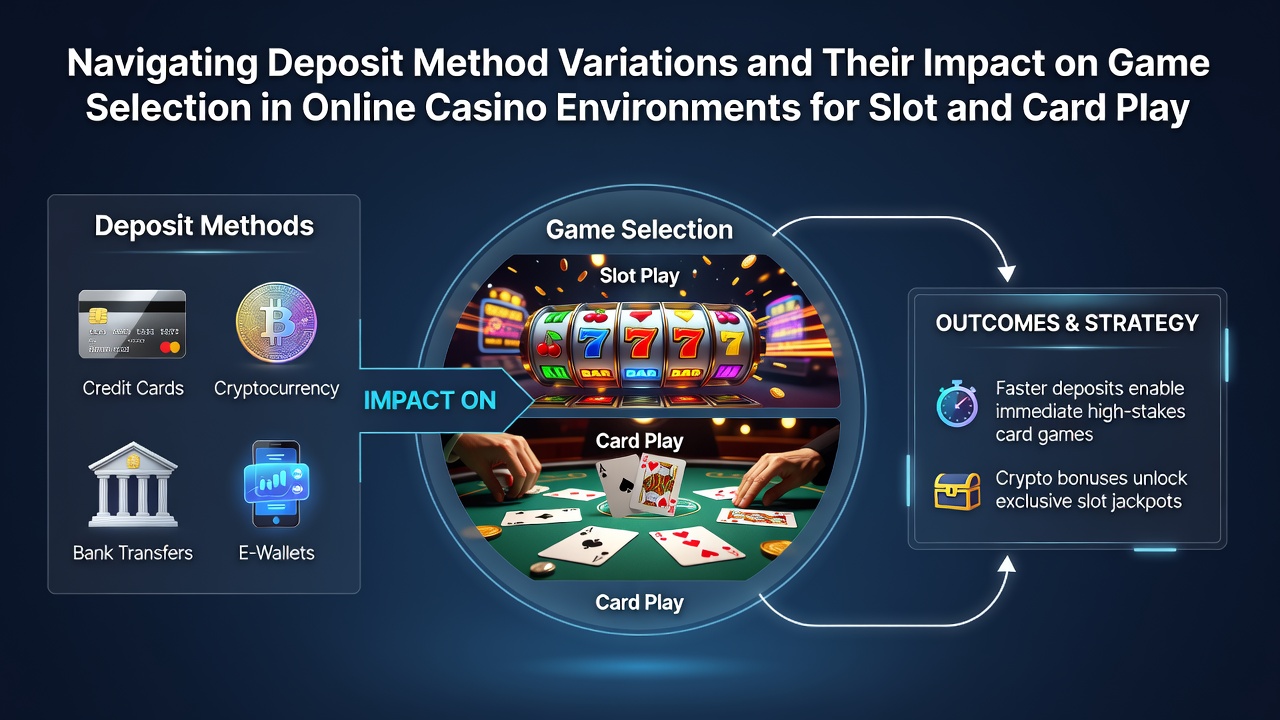
Navigating Deposit Method Variations and Their Impact on Game Selection in Online Casino Environments for Slot and Card Play
Deposit methods in online casino settings range from traditional bank transfers and credit cards to e-wallets such as Skrill and Neteller along with cryptocurrencies like Bitcoin and Ethereum, each carrying distinct processing times, fee structures, and minimum thresholds that shape player choices between slot machines and card games. Data from industry reports indicates that faster options often align with high-frequency slot sessions while slower methods correlate with deliberate card play formats.
Payment speed plays a direct role because instant deposits allow immediate access to time-limited slot tournaments whereas bank wires that clear in one to three business days steer users toward scheduled card events with lower urgency. Transaction costs further influence decisions since platforms applying percentage fees on certain methods reduce effective bankrolls for penny slots yet leave card game buy-ins largely intact when flat-rate options are selected.
Common Deposit Categories and Their Characteristics
Electronic wallets process transactions within minutes and typically support both slot spins and live dealer tables without extended verification steps while cryptocurrencies provide similar speed plus lower fees in many jurisdictions. Credit and debit cards remain widely accepted but may trigger additional authorization holds that delay play by several hours and sometimes incur cash-advance charges depending on the issuing bank.
Bank transfers and prepaid vouchers move more slowly yet avoid recurring fees which suits players who allocate fixed amounts for extended card sessions rather than repeated small slot deposits. Observers note that these variations create distinct access patterns where rapid methods expand the pool of available slot titles including progressive jackpots while slower methods restrict participation to standard table limits.
Influence on Slot Game Selection
Players using instant e-wallets frequently gravitate toward high-volatility slots because quick top-ups support multiple sessions without waiting periods and research from payment analytics firms shows elevated activity in bonus-buy features when funding arrives immediately. In contrast those relying on wire transfers often choose lower-denomination reels that stretch smaller initial balances across longer periods.
Bonus eligibility tied to deposit type also matters because many operators restrict free-spin promotions to e-wallet or crypto users which in turn funnels those players toward themed slot libraries that feature such incentives. Figures from October 2026 platform data reveal that crypto-funded accounts record higher engagement rates with new slot releases compared with card-funded accounts that show steadier play on established titles.

Effects on Card Game Access and Preferences
Card formats such as blackjack and poker require precise bankroll management and deposit methods that clear quickly enable entry into sit-and-go tournaments or cash tables where timing affects seat availability. Slower methods like certain prepaid cards limit participation to scheduled events rather than spontaneous play which researchers tracking user logs have linked to reduced frequency of multi-table sessions.
Regional regulatory environments add another layer because jurisdictions monitored by the Malta Gaming Authority permit broader crypto integration that expands live dealer card options while other markets maintain stricter card-only policies that favor traditional table games over rapid slot cycles. American Gaming Association statistics from 2026 illustrate how payment flexibility correlates with higher table game retention in states with mature online frameworks.
Cross-Regional Patterns Observed in 2026
Platforms operating across multiple markets demonstrate that Australian users favor POLi transfers for their security features which steer activity toward measured card play whereas European accounts more commonly adopt instant bank apps that support fluid switching between slots and live tables. Canadian provincial reports similarly highlight how Interac e-transfers reduce friction for slot enthusiasts seeking quick reloads during promotional windows.
These geographic differences produce measurable shifts in game libraries offered to specific user segments and analysts at research institutions have documented increased hybrid play when deposit options include both fast and low-cost choices. One study of transaction logs found that accounts combining crypto and e-wallet methods logged 30 percent more transitions between slot and card categories within single sessions compared with single-method accounts.
Conclusion
Deposit method variations continue to shape game selection by aligning transaction speed and cost with the pacing requirements of slots versus card formats and data gathered through October 2026 confirms these patterns persist across diverse regulatory landscapes. Operators and players alike respond to these mechanics through adjusted offerings and choices that reflect the practical constraints of each payment channel.